Data platforms & pipelines
Streaming and batch pipelines, warehouse and lakehouse design, and microservice architectures on Kubernetes and the cloud. Built for real-time workloads and for teams that need to onboard new sources fast.
Data & AI engineering · Munich, Germany
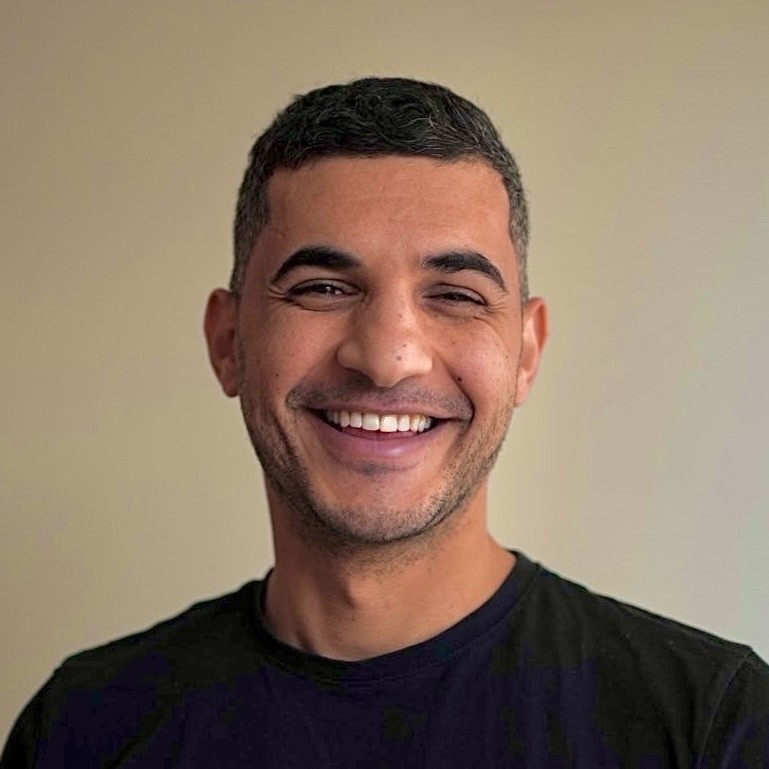
I'm Feras, a lead data engineer with more than ten years across energy, manufacturing, IoT and telecoms. I design the platforms, pipelines and machine-learning systems behind real-time decisions, from the factory floor to Europe's power grid.
Services
Whether you need a platform built from scratch, a model taken out of a notebook, or a senior second opinion before a big decision.
Streaming and batch pipelines, warehouse and lakehouse design, and microservice architectures on Kubernetes and the cloud. Built for real-time workloads and for teams that need to onboard new sources fast.
Forecasting and anomaly detection on time-series data, and LLM applications with retrieval over your own documents. I take models out of notebooks and into versioned, monitored production services.
Architecture reviews, platform roadmaps, build-versus-buy decisions and hands-on coaching for your engineers. For leaders who need a senior voice in the room without a full-time hire.
Fixed scope, fixed price. A working system with docs and handover.
One to three days a week embedded with your team for a few months.
A focused day to review an architecture, a plan or a hiring decision.
Selected work
A few representative projects. Details are kept general out of respect for the companies involved. I'm happy to go deeper on a call.
Designed and built the data platform that detects congestion on E.ON's grid in real time, and the microservice architecture that lets additional grid subsidiaries onboard quickly. Contributed to the architecture of the group's private cloud platform with a focus on scalability and security.
Built scalable systems for multi-dimensional time-series data on AWS and Kubernetes, near-real-time processing with Apache Flink, and the DataOps and MLOps platform the data-science team used to ship models: MLflow, Airflow, Evidently and TensorFlow Serving.
End-to-end system for streaming data from wearables: MQTT ingestion, NiFi data flows, InfluxDB storage and Grafana alerting, deployed on containerised distributed infrastructure. Also wrote firmware drivers for the optical, motion and gas sensors on the device.
Developed and evaluated deep-learning and statistical models for time-series forecasting and anomaly detection (LSTM, autoencoders, SARIMA), and built a component of a data-driven network intrusion detection system based on traffic analysis.
How I work
Thirty minutes, free. We talk through the problem and decide together whether I'm the right person for it.
A short written proposal: goals, an architecture sketch, timeline and price. You know what you're buying before you commit.
Weekly demos, working software from the first weeks, and decisions written down so nothing lives only in my head.
Your team owns the result: documentation, runbooks, monitoring and pairing sessions until they're comfortable running it.
Principles
About
I started by building the Palestinian Museum's computer network from nothing, switches, firewalls, servers and all. Then I moved to Budapest for a master's in data science, did machine-learning research at Telekom Innovation Labs and Nokia, and spent the last six years building data and ML systems in Berlin and Munich.
That path is why I care about the whole stack: the model, the pipeline that feeds it, the cluster it runs on, and the person on call when it breaks at 3 am. I like working with teams who want things to be simple, well understood and genuinely finished.
Outside of work I'm usually learning something new, most recently retrieval-augmented generation and agentic coding tools, or somewhere in the Alps.
He led the development of the Palestinian Museum's computer network from scratch. This entailed a plethora of challenging activities, from designing and implementing a sophisticated local network to putting in place the required servers and securing the entire network. He spared no effort or time to make this infrastructural establishment see the light, and succeeded in creating a common ground and a common language with professionals from different walks of life.
Questions
Mostly remotely, across European time zones. I'm based in Munich and regularly in Berlin, so on-site kick-offs and workshops are easy to arrange.
Projects are quoted as a fixed price for a fixed scope. Fractional and advisory work is billed by the day. You get a written quote after the intro call, never a surprise invoice.
That's my preferred setup. I pair with your team, review their work, and leave documentation and runbooks behind so the system stays healthy after the engagement ends.
Python-first, with Kafka, Flink, Spark, Airflow, Kubernetes, AWS and Azure. On the ML side PyTorch, TensorFlow and MLflow, plus LLM tooling for retrieval-based applications. If you use something else, ask. I've switched stacks before.
Startups that need senior hands fast, mid-sized companies modernising their data stack, and enterprise teams that need a specialist for a defined piece of work.
Let's talk
Book a free thirty-minute call. Bring the messy version of the problem. I'll tell you honestly whether I can help and what it would take.